PPF For Vehicles: The Invisible Shield To Save Your Paint
For car enthusiasts, their vehicle is more than just transportation – it's a prized possession, a reflection of style, and a source of pride. Protecting that investment is paramount, and that's where Paint Protection Film (PPF) comes in. This innovative product acts as an invisible shield, safeguarding your car's paint from the everyday wear and tear of the road. 
One of the most compelling benefits of PPF lies in its ability to preserve the original shine and condition of your vehicle's paint. It acts as a barrier against:
PPF Preserves That Pristine Look
One of the most compelling benefits of PPF lies in its ability to preserve the original shine and condition of your vehicle's paint. It acts as a barrier against:
- Scratches and scuffs: Whether it's rogue shopping carts in parking lots or flying debris on the highway, PPF forms a tough shield, absorbing minor impacts and preventing them from damaging the underlying paint.
- Swirl marks: These unsightly marks, often caused by improper washing techniques, can be a thing of the past with PPF. The film acts as a sacrificial layer, taking the brunt of the punishment during the washing process.
PPF Offers Protection Against Other Threats Too
- Chemical Stains: From bird droppings to acidic rain, PPF forms a barrier against harmful chemicals that can etch and stain the paint.
- Self-Healing Properties: Some PPF options boast self-healing properties. Minor scratches and swirls inflicted by everyday wear and tear can "heal" themselves under moderate heat, thanks to the film's unique composition.
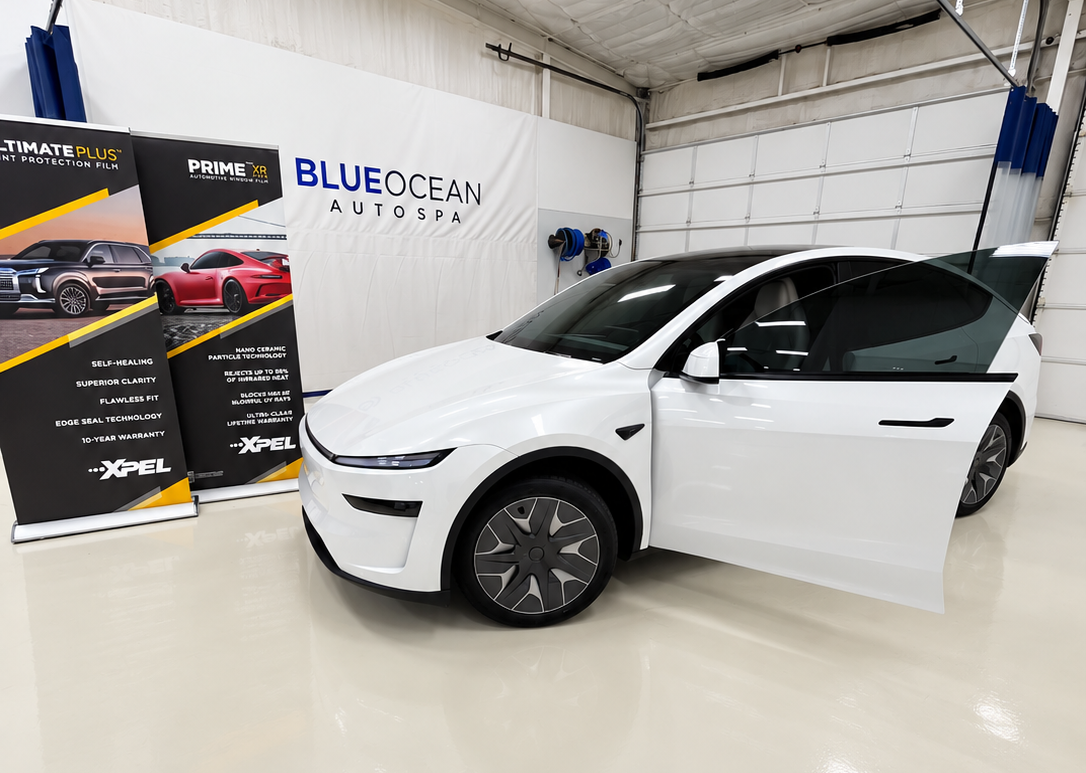
See how a 2027 Tesla Model Y L tint appointment became a protection project with XPEL full-front PPF, XR Plus tint and screen protection.
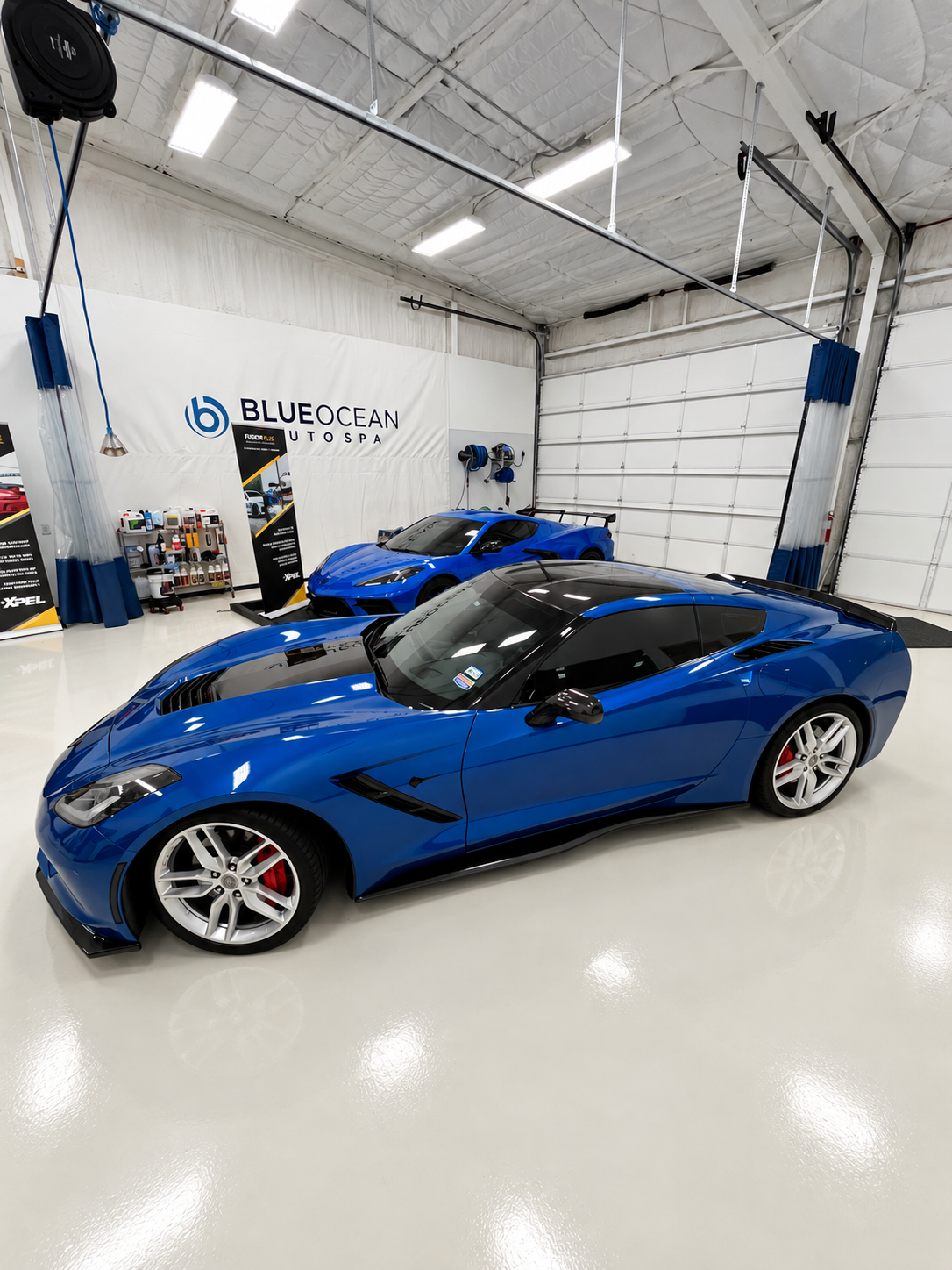
It's not often we have two generations of Corvette sitting side by side in our Cedar Park shop—especially when they're exactly ten model years apart. This 2016 C7 Corvette and 2026 C8 Corvette came to Blue Ocean Auto Spa at the same time for similar treatment: paint enhancement followed by XPEL FUSION PLUS PREMIUM V2 ceramic coating. The result made for a great photo. But what happened before those finished photos is the more important part of this project. A ceramic coating can only perform over the surface underneath it. That's why we put so much emphasis on preparation before the coating ever touches the paint.
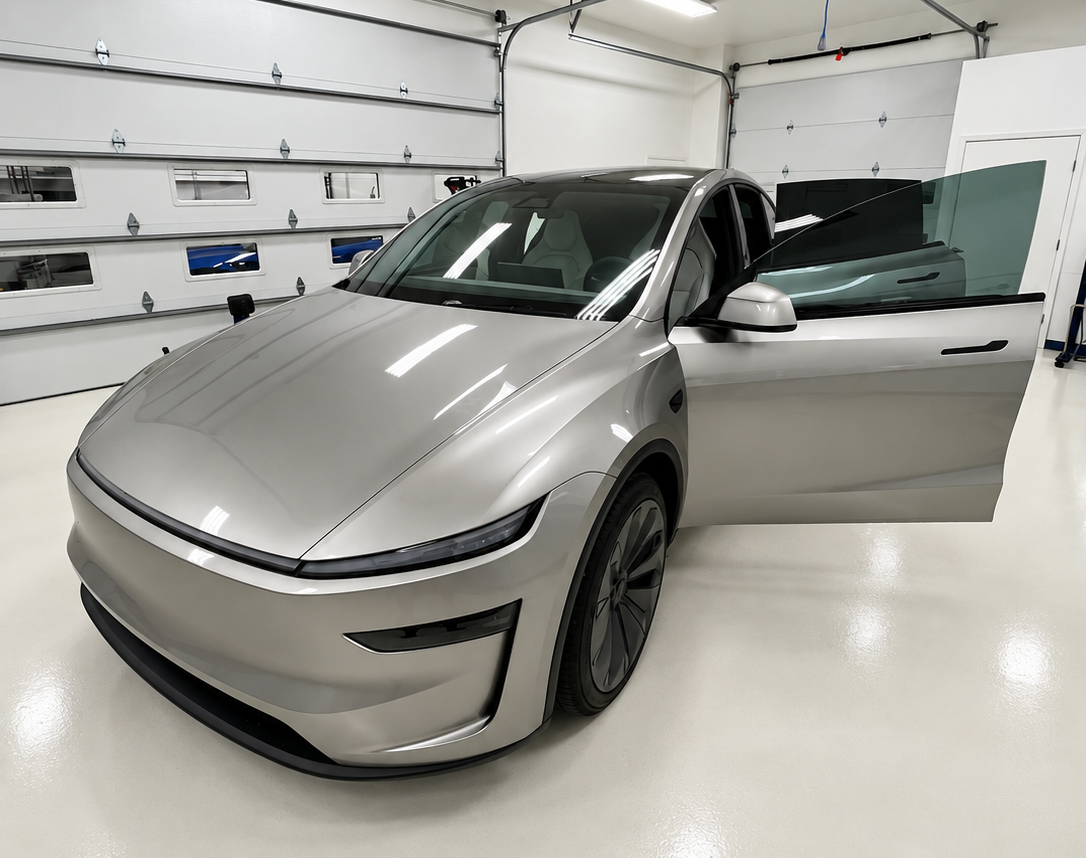
See our first 2027 Tesla Model Y L six-seater window tint project in Cedar Park, featuring XPEL PRIME XR Plus on the side glass and windshield.